
Mechanical infrared inspection, from the bearing to the buried line
A machine that is running badly turns its energy into heat: a bearing with the wrong lubrication, a coupling out of line, a belt that is slipping, a steam trap passing live steam, a buried line leaking into the soil. Most of it gives no outward sign until it fails, and a worn bearing or a failed trap can run for months costing energy and equipment life. An inspection under load finds the heat first, so the repair happens on the schedule instead of during the shutdown.
For plant & facility engineers · maintenance managers · hospitals · campuses · district energy
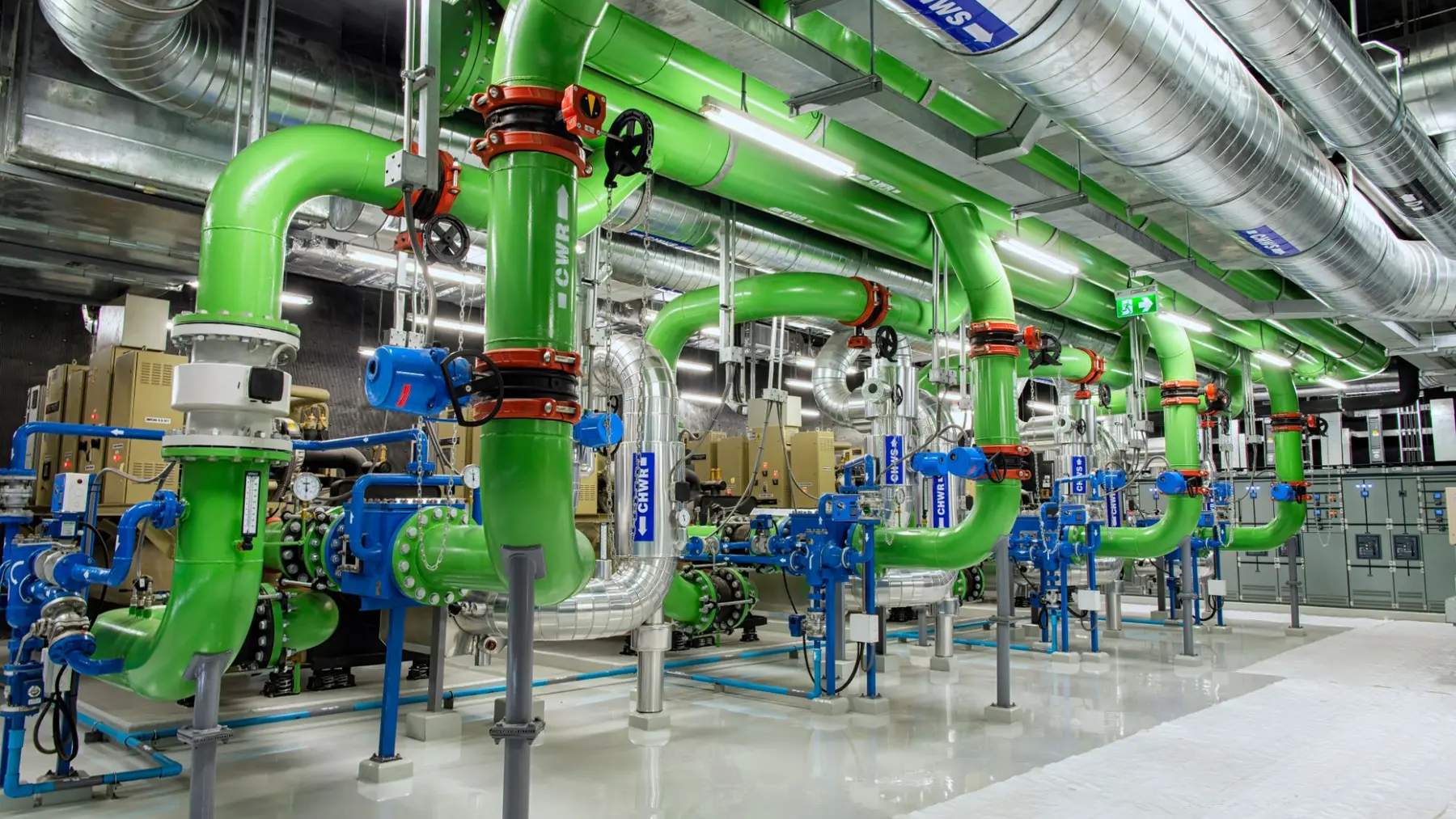
What we inspect
Five lines, one rule: similar equipment under similar load should look alike, and the one that does not is the finding. Each line below opens up if you want the detail.
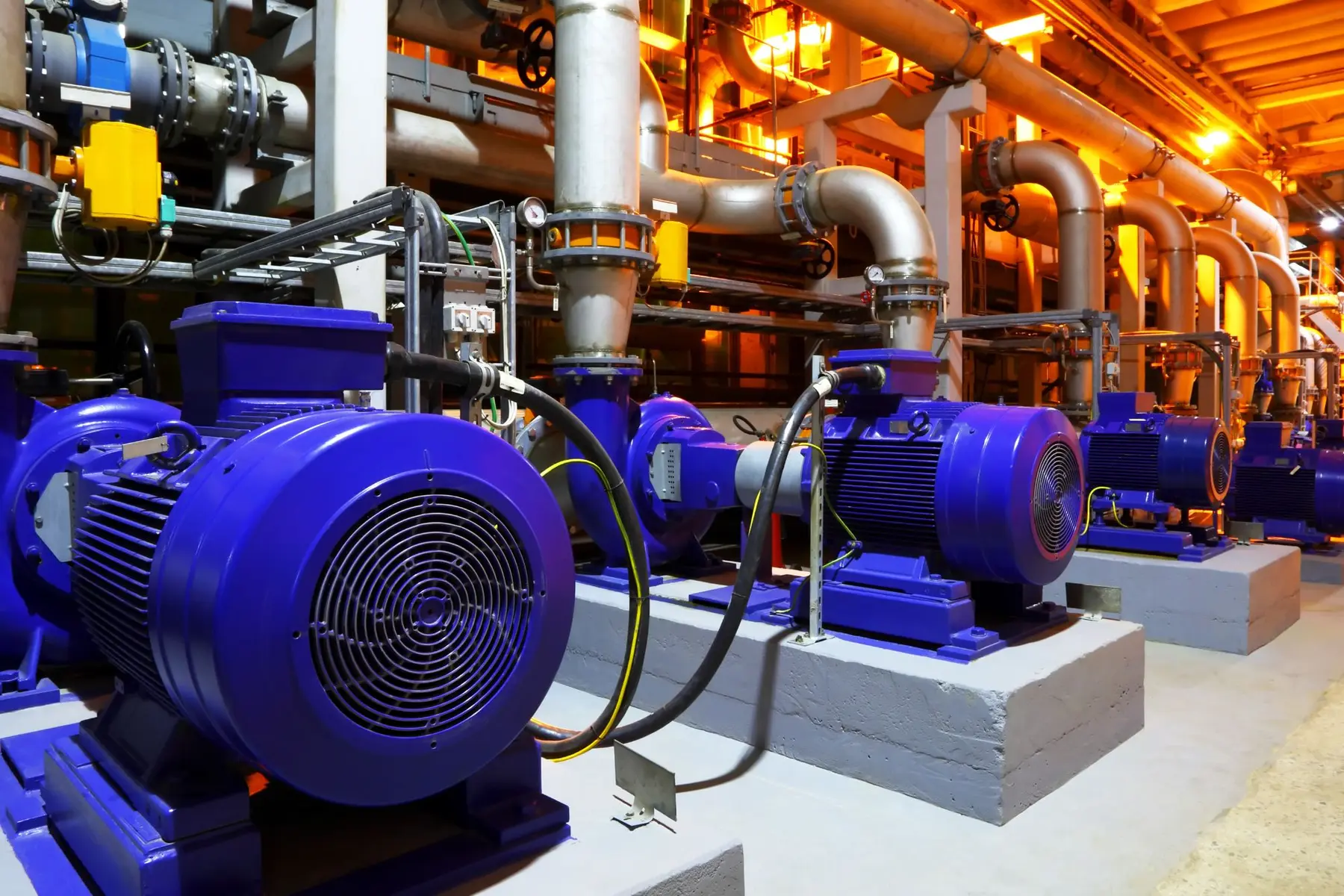
Motors, bearings, couplings and belts
Rotating equipment inspected as assemblies: the motor, its connections and cooling, the bearing housings at each end, the coupling or belt, and whatever it drives. Identical units under the same load are compared with each other, and the one that stands out is reported with the test that should confirm the cause.
What it finds
- Motor connection boxes, blocked cooling, and casing hot spots pointing at the stator
- Bearings warmer than their twins: wear, misalignment, over- or under-lubrication
- Misaligned couplings — angular, parallel or both — heating under load
- Slipping, over-tensioned or misaligned belts and worn sheaves
- Gearboxes and drive units, located to a bearing, a gear mesh or the lubricant
- Pumps, fans and compressors: seal and bearing heating, blocked cooling
How the inspection works
Everything about to fail is working harder than it should
A machine running well turns most of its energy into work. A machine running badly turns more of it into heat: a bearing with the wrong amount of grease, a coupling slightly out of line, a belt that is slipping, a gear mesh that is wearing. The heat appears long before the noise, the vibration alarm or the breakdown.
Why bearings make the case for a schedule
A healthy bearing runs near ambient. As wear begins its temperature rises gradually, then sharply when critical wear starts and failure is imminent. An inspection on a fixed cycle catches the gradual stage; a breakdown catches the other one. Dozens of bearings can be screened in minutes and the outliers listed.
What thermography cannot tell you
It finds the symptom, not the cause, and it needs line of sight. Vibration analysis, laser alignment, an ammeter for load and ultrasound are the confirming tools, and the report says which one applies. Guards are removed, or not, by your staff under the site rules.
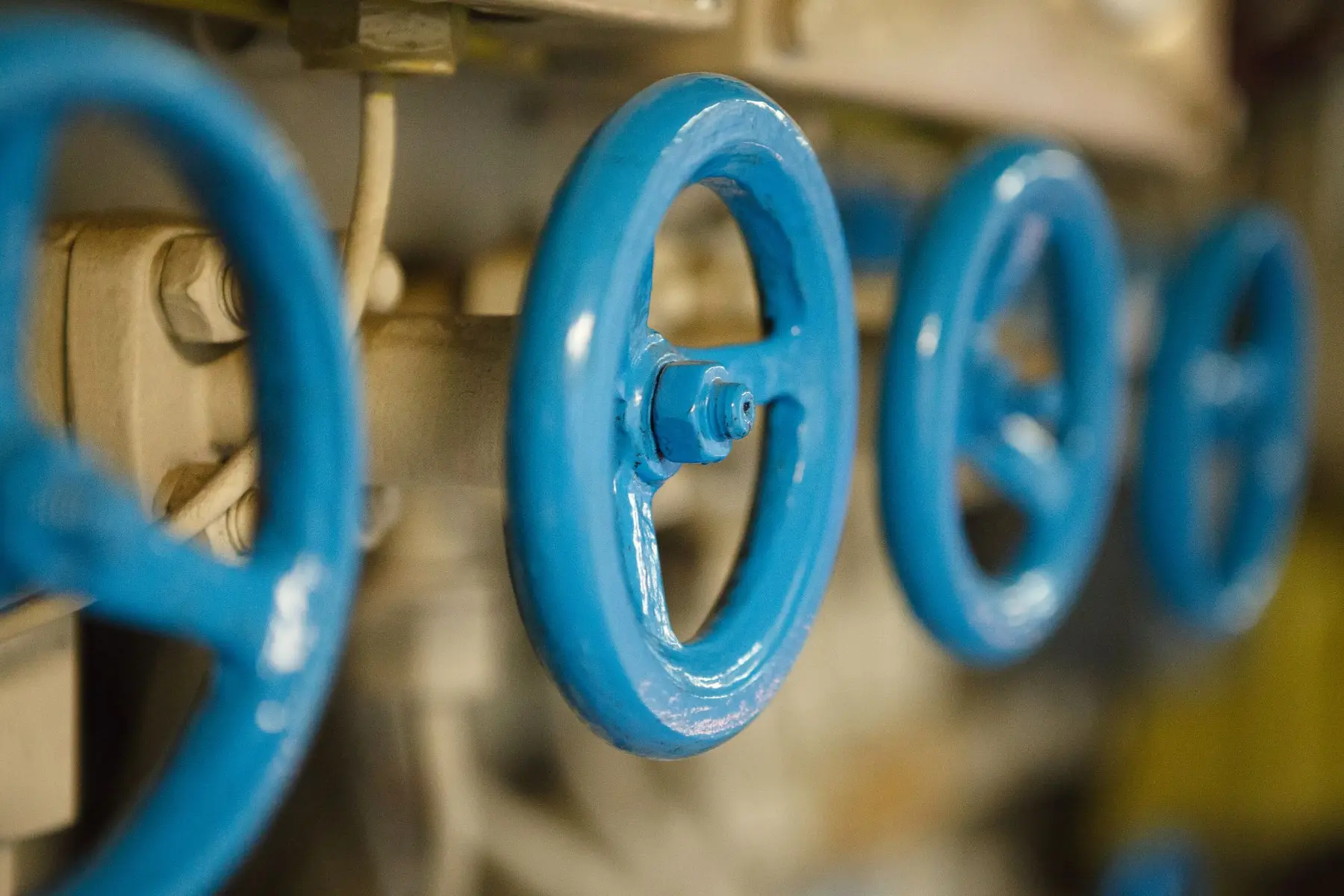
Steam traps, valves, boilers and heat exchangers
Leaks, blockages and flow problems change the operating temperature of the equipment and the pipe. A steam and fluid survey reads that: the trap that is passing live steam, the valve that is not quite closed, the exchanger section that is blocked, the boiler tube that is not flowing.
What it finds
- Failed steam traps — passing steam or not receiving it — confirmed with ultrasound
- Valves and pressure relief valves that are passing or weeping
- Blocked tubes or sections in heat exchangers, radiators and condensers
- Boiler water tubes suspect for blockage; refractory and casing hot spots
- Process heater tubes with deposits, and hydraulic hoses and filters blocked
- Missing or wet insulation on steam, hot-water and chilled-water piping
How the inspection works
Steam traps
A failed trap has no outward sign and can pass large quantities of live steam continuously; failure rates across a plant are routinely high. The inlet temperature says whether steam is reaching the trap; ultrasound at the outlet says whether it is cycling or blowing through. Neither is reliable alone in a congested header, so both are used, and the imager finds the cause when a trap is cold.
Exchangers, boilers and valves
Similar components under similar flow should look alike. A radiator section or a bank of tubes that runs cooler than its neighbours is suspect for blockage; a valve that should be closed but is warm on the downstream side is passing. Boiler tubes are assessed offline by flushing hot water through them and comparing like with like. All of it is confirmed with additional testing before work is scoped.
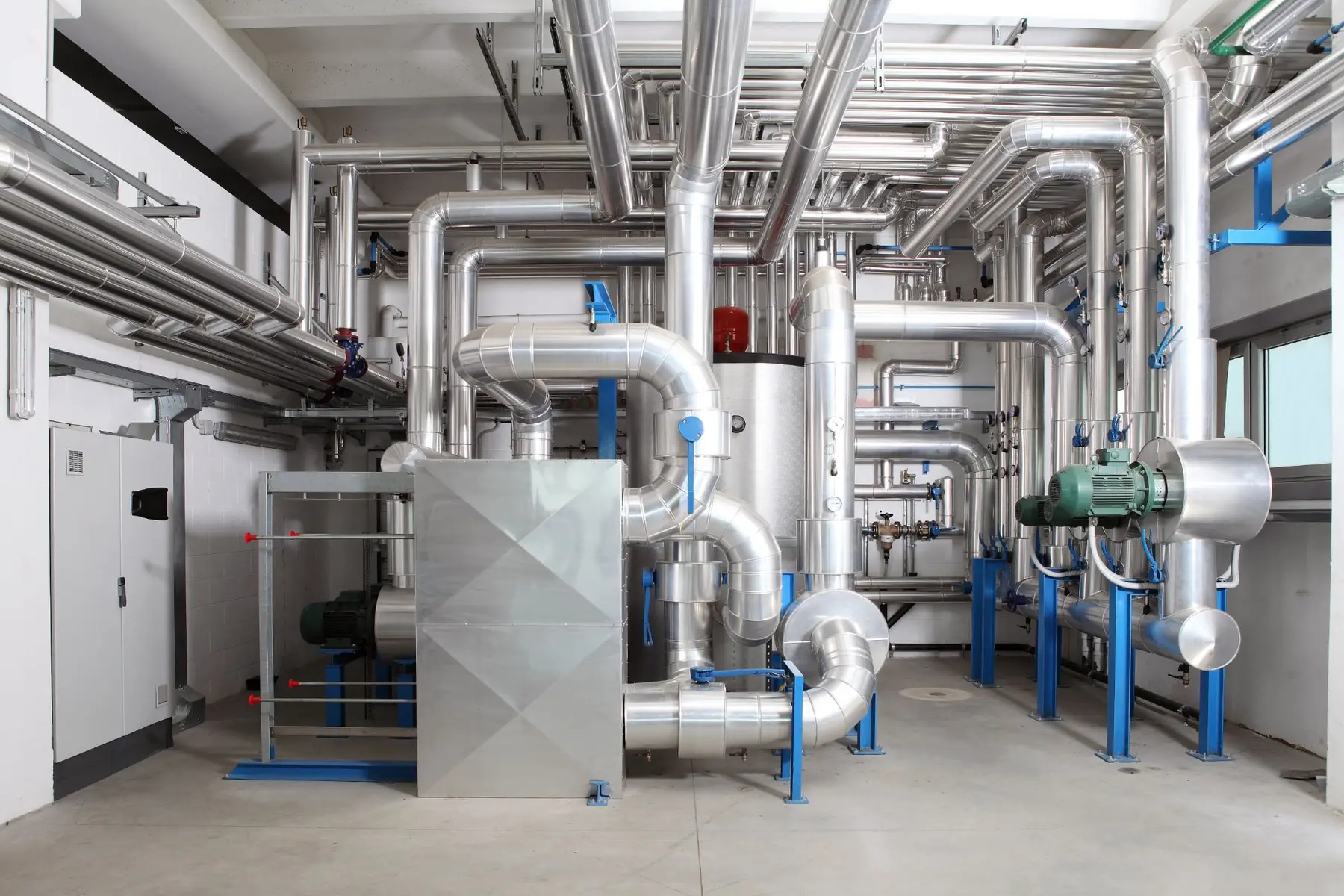
HVAC and refrigeration
Rooftop units, condensers and exhaust fans are captured for every unit on a large building in one aerial pass, often in the same mobilisation as a roof survey. Chiller plants, air handlers, pumps and the mechanical room are inspected by hand. The same comparisons apply: like unit, like load, odd one out.
What it finds
- Blocked or dirty coil sections and uneven refrigerant distribution
- Failed condenser fan motors and compressor heating
- Chiller and air-handler motors, bearings and belt drives
- Balance of flow across parallel pumps and units
- Drives and starters in the mechanical room — an electrical finding on a mechanical route
- Steam, hot-water and chilled-water coils not performing
How the inspection works
Hospitals, campuses and plants that cannot stop
A central plant runs boilers, chillers, air handlers and hundreds of motors around the clock, and almost none of it can be taken down to be looked at. Infrared inspection is built for that: nothing is stopped, nothing is opened that is not already accessible, the route is walked with your engineer during normal operation, and findings go to your maintenance system as ranked work orders.
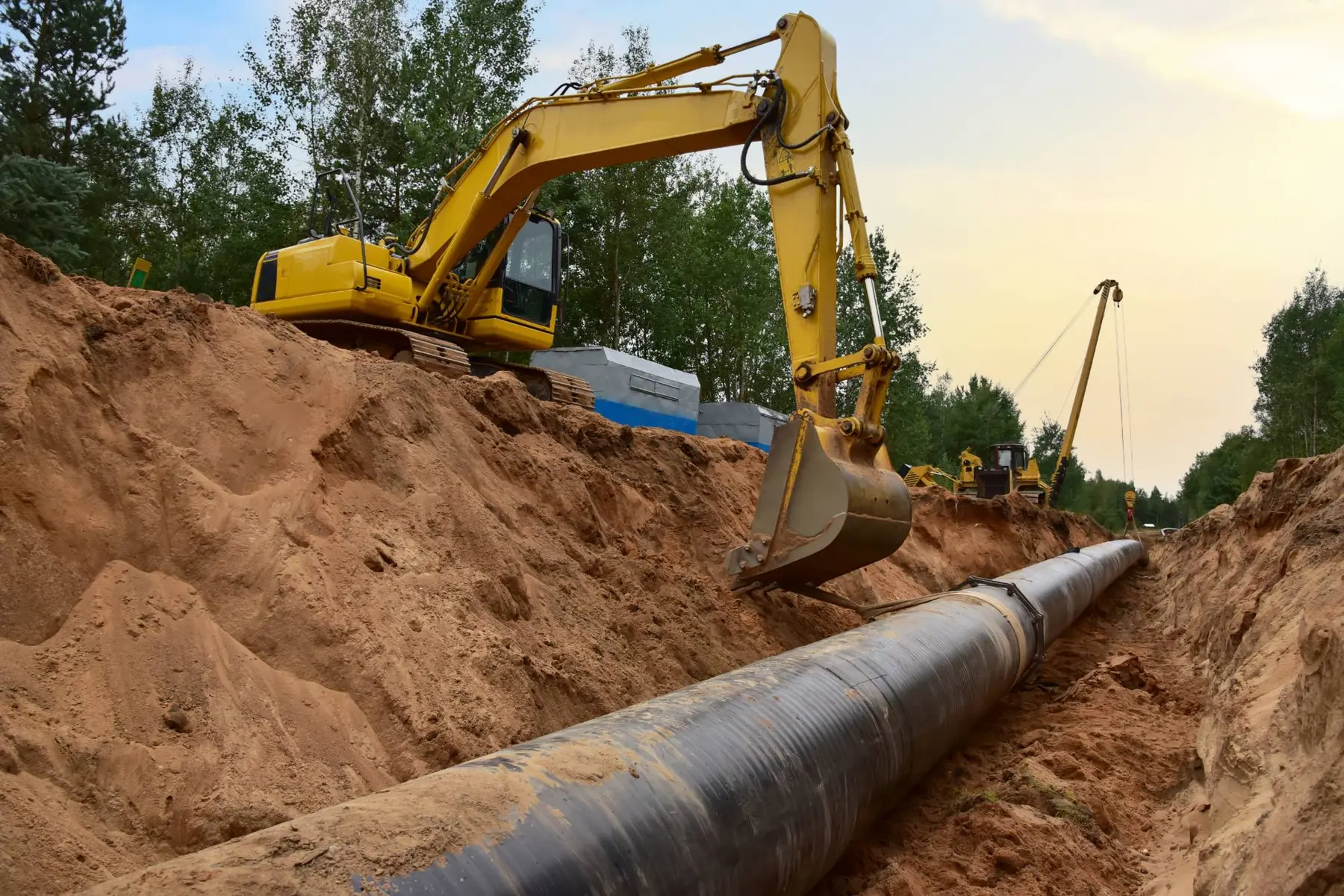
Underground pipes and steam lines
Buried steam, condensate, hot-water and chilled-water lines, and radiant floor heating. A leaking or uninsulated line changes the temperature of the ground above it; after dark, once the sun has drained out of the surface, the survey follows that trace along the route and marks where it changes, so one test pit replaces a trench.
What it finds
- Steam and hot-water leaks: the warm trace widens, brightens or spreads sideways
- Failed conduit insulation along a section of the route
- Chilled-water leaks, with the sign reversed, on a warm night
- Lines under pavement, which often show more clearly than under turf
- Radiant floor loop leaks, as a hot spot on the slab or at its perimeter
- Where a line actually runs, when the drawings are missing or wrong
How the inspection works
What decides whether a leak can be seen
Six things: the operating temperature of the fluid, the burial depth, the amount of loss, the pipe construction, the soil type and moisture, and the ground cover. Steam at shallow depth under pavement is easy; a pinhole in a deep, well-insulated conduit under wet turf may not reach the surface at all. We ask about all six before quoting and say plainly when a line is unlikely to show.
Surveyed at night, verified by looking
Daytime solar loading swamps the signal from a buried line, so the survey runs late at night with the system at normal operating temperature, on dry ground in calm wind; a cold clear night with a thin frost is close to ideal. Every mark is verified visually — a test pit or a conduit camera at the location given — before anyone digs. Infrared does not see through the ground and does not find every leak; it tells you where to look first.
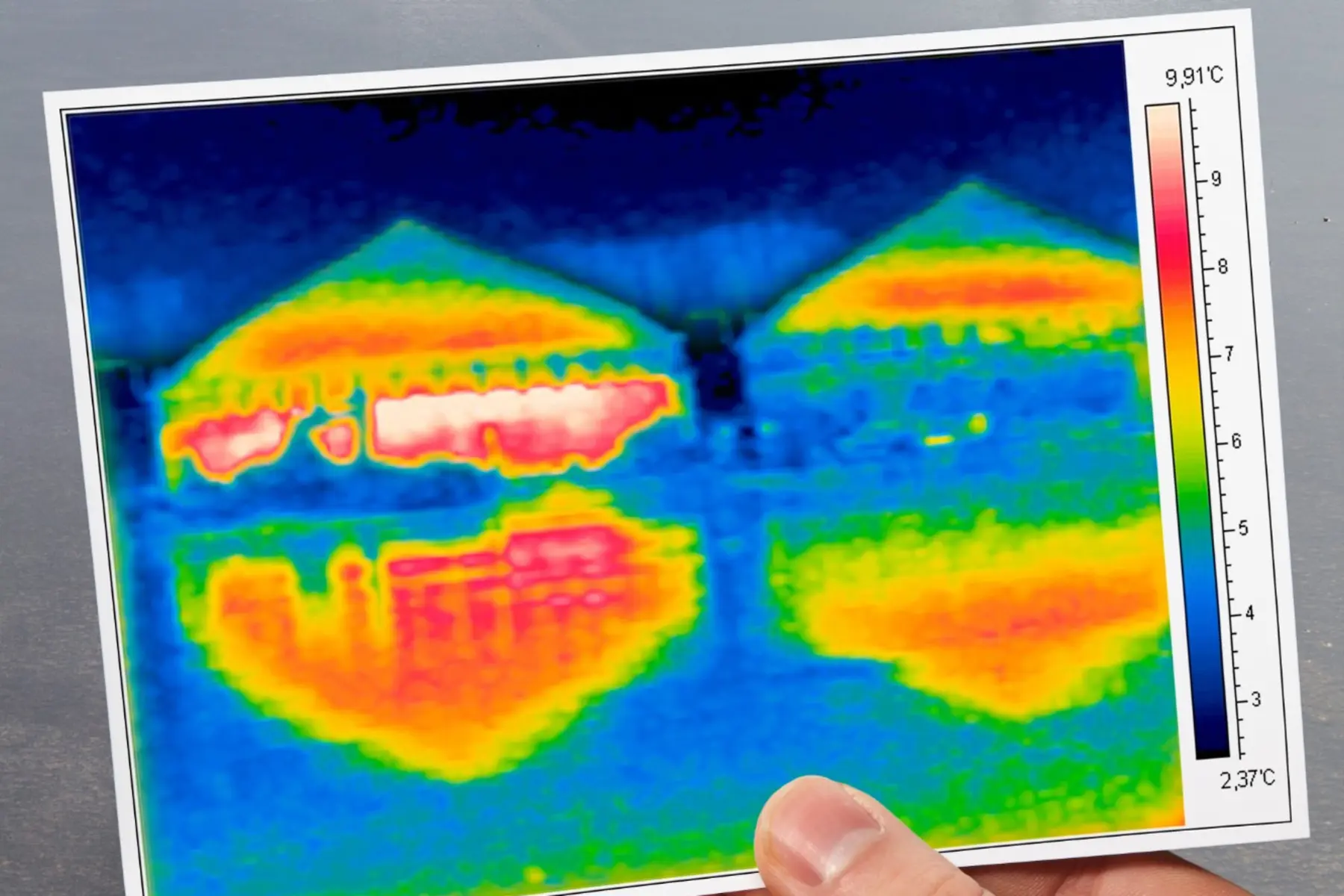
Tank, silo and drum levels
Liquid and solid contents store heat differently from the air above them, so the fill line on a storage tank, a silo or a drum shows as a change in surface temperature when the ambient has moved. A fast, non-contact check of levels across a tank farm, and a way to find a stuck level gauge.
What it finds
- Liquid level in storage tanks, without opening or instrumenting them
- Product level and bridging in silos
- Fill level across a row of drums or totes in one image
- Sludge and sediment layers that read differently from the liquid above
How the inspection works
How it works and when it does not
The survey relies on a temperature difference between the contents and the air, usually after sunrise or sunset when the ambient is moving and the tank wall above the contents follows it faster than the wall below. Heavily insulated tanks and shiny, low-emittance surfaces limit what can be seen, and the report says so rather than guessing a level.
What you receive
The report is the product. Every inspection is qualitative — exceptions found by comparing like with like under similar load — and every finding is documented so the comparison can be checked.
48 HOURS FOR A SINGLE FRONT RANGE SITE · 5 DAYS MULTI-SITE
- A plan or asset list with every exception located to the component, module, structure or area
- A thermal image and a daylight photograph of each exception, beside what it was compared against
- The load, weather and conditions at the time of capture, so the images can be read in context
- A defect class, a priority ranked by consequence, and a recommended action for every finding
- Findings as structured data for your CMMS or capital plan, so nothing is retyped from a PDF
- Re-inspection of repaired items on request, documented with a new image
Thermal Inspection Program
Put it on a schedule
A single survey tells you what is wrong today. A program is the same inventory, inspected the same way on a fixed cadence, with findings tracked to work orders and each cycle compared with the last. It is also the simplest way to buy this: one agreement, one point of contact, inspections on the calendar before you need them.
For mechanical: an annual baseline on the full inventory, a semi-annual pass on critical and heavily loaded drives, steam traps before heating season, and buried lines on a cold clear night in winter.
- One or two inspections a year on a fixed inventory, under the same conditions each time
- Every repair re-inspected before it is closed, documented with a new image
- Year-over-year comparison from the second cycle, so trends are visible
- Member rate on anything additional, and priority scheduling after storms and before shutdowns
Mechanical questions
Does the equipment need to be running?
Yes, under its normal load. A bearing, a coupling or a belt only heats when it is doing work, a steam trap only shows its state with steam on the line, and a buried pipe only shows at the surface when it is carrying something warmer or colder than the ground. We schedule for the shift, season or production run that represents normal operation and record what was running when each image was taken.
Scope a mechanical inspection
Send the facility type, the equipment you want covered and when it runs at normal load. We will scope the route and return a quote within one business day.
Front Range daily. Statewide for the right project.
Quote scoped and returned within one business day.