
Electrical infrared inspection, from the panel to the power line
Current through a loose, corroded or overloaded connection makes heat, and most electrical failures run warm for weeks before they fail. A heating connection does not heal itself: left alone it arcs, welds and eventually lets go, usually at the worst time. An inspection under normal load finds it while it is still a small repair on your schedule, not an outage, a fire or a ruined switchboard.
For hospitals & healthcare · data centres · manufacturing · solar asset owners · utilities & prime contractors
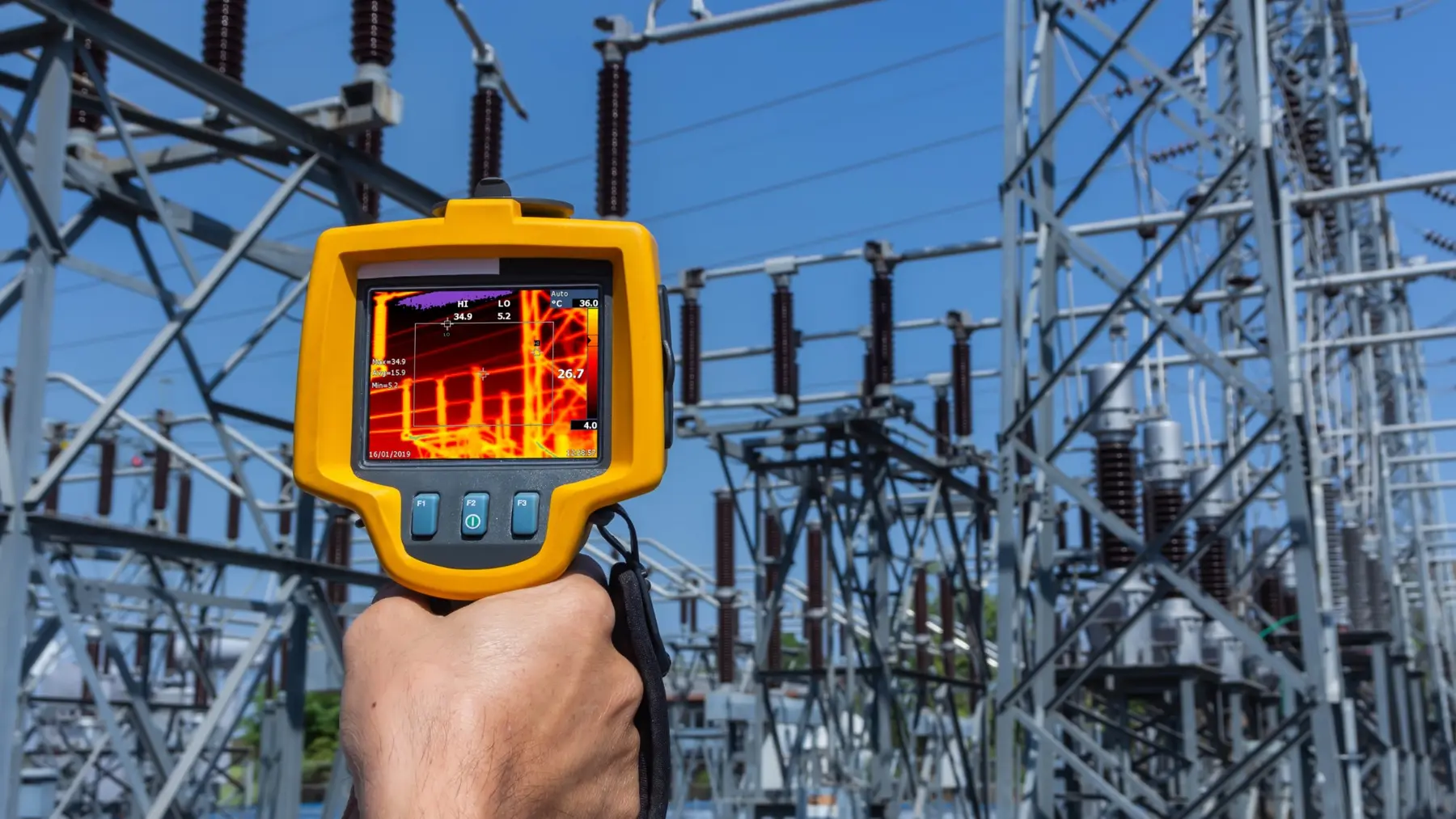
What we inspect
Four lines, one physics: current makes heat, and a failing component makes more of it. Each one below opens up if you want the detail.
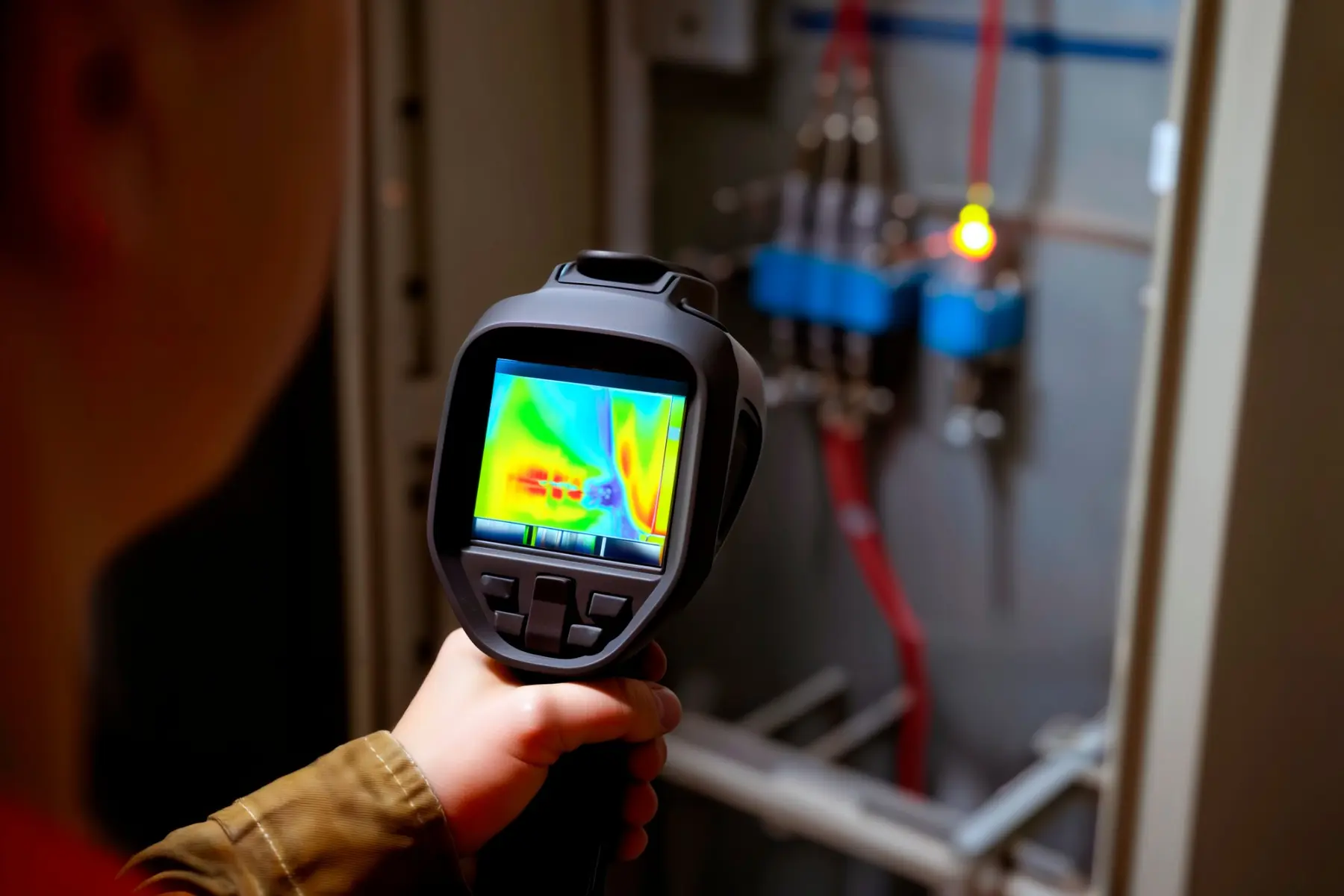
Switchgear, panels and distribution
Service entrance to branch panels: switchgear, panelboards, motor control centres, transformers, bus duct, transfer switches, UPS and battery strings. Inspected in the electrical room with the enclosures open and the system under load, each phase compared with the other two.
What it finds
- Loose and deteriorated connections — lugs, splices, fuse clips, bolted joints
- Unbalanced and overloaded phases, warm along their whole length
- Open circuits: a fuse, capacitor or phase running cool because it carries nothing
- Inductive heating of enclosure steel, supports and bolts
- Harmonic heating of neutrals and transformer windings from drives, UPS and IT loads
- Defective equipment — blocked radiators, low oil, a failing UPS cell, a breaker hotter than its twin
How the inspection works
Current makes heat, resistance makes more of it
A loose, corroded or undersized connection adds resistance, and resistance under load adds heat. Most electrical failures announce themselves this way for weeks before they fail, and a few announce themselves by running cold. The imager sees that from across the room.
Temperature is not severity
A heating connection arcs, the arc welds it, resistance drops and the temperature falls, then the weld breaks and it starts again. So a modest rise can hide a badly deteriorated joint. Priority is set by consequence — what fails and what that takes down — and every exception is reported, with the confirming test named: an ammeter for load, a waveform analyser for harmonics, a contact-resistance check for a suspect joint.
What it needs from you
Normal load on the day, an inventory of the panels in the order they are fed, and a qualified electrician who opens and closes enclosures and controls access. Work is governed by your site rules and NFPA 70E. Infrared does not see through covers, and anything that cannot be opened safely is noted rather than guessed.
Hospitals and facilities that cannot stop
Essential electrical system branches, generator and transfer gear, UPS strings feeding imaging and critical care, data-centre lineups and busway, the MCCs behind a production line. Nothing is switched off, nothing is touched, and the route is walked by area with your facilities team. An annual report is the documented electrical maintenance that NFPA 70B and accreditation surveys expect to see.
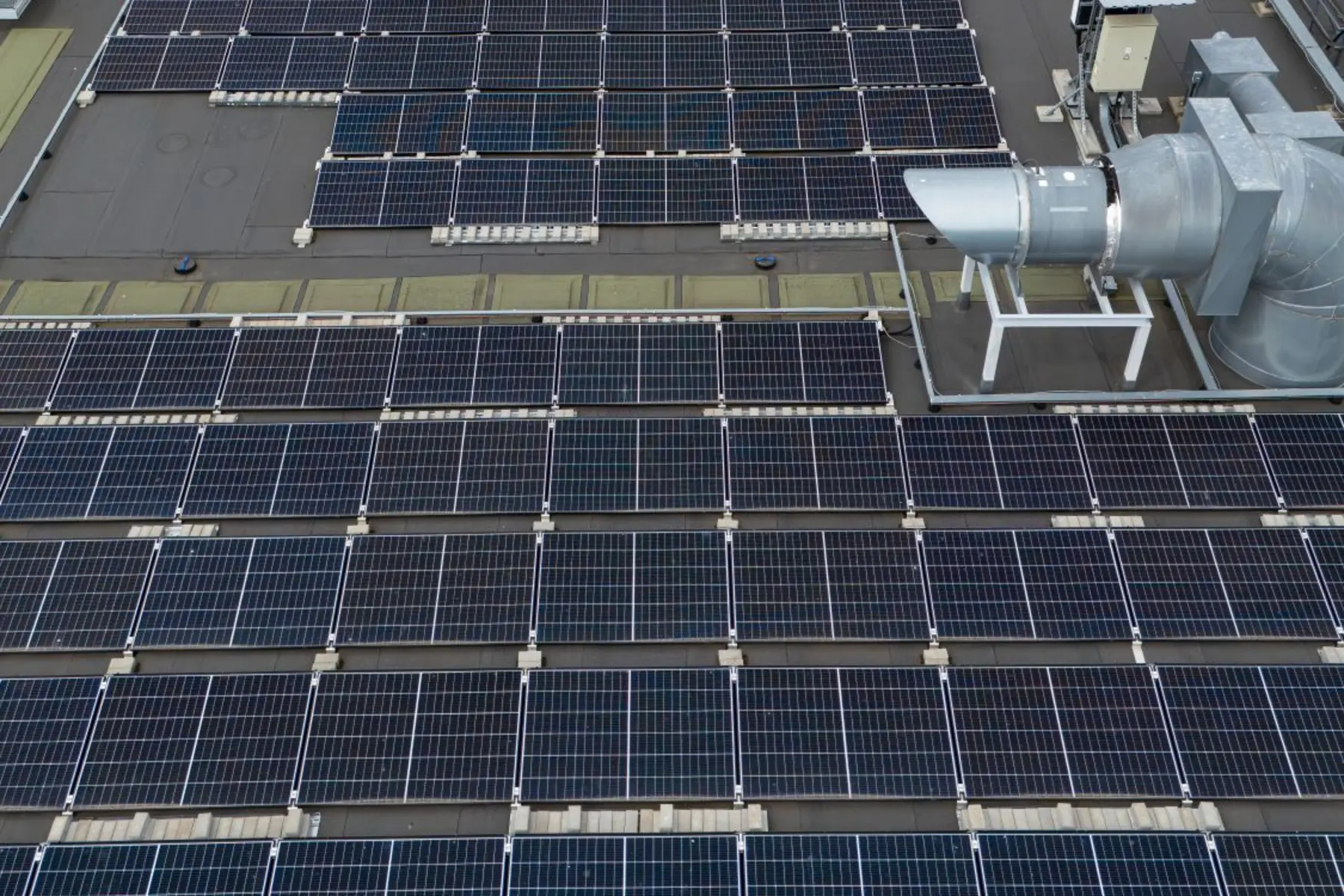
Solar PV arrays
Commercial rooftops, industrial arrays and ground mounts, captured from above in a single mobilisation. Modules under electrical stress run warmer than their neighbours in the same string; every anomaly is located to the module, classified by its thermal pattern and ranked for repair, in a report structured on the IEC 62446-3 anomaly classes.
What it finds
- Cell and module hot spots: sharply bounded, anchored to one location
- Strings and combiners producing nothing — a cool, contiguous run of modules
- Bypass diode failures: a repeating banded pattern within a module
- Junction box and connector heating — small signatures, high consequence
- Progressive, position-correlated degradation across a section, visible year over year
- Soiling and shading, called out as not defects, and post-hail cell fracturing
How the inspection works
Monitoring says production is down. It does not say which module.
A string-level shortfall can be one cracked cell, a diode across forty modules, a loose termination heading for an arc fault, or a month of dust. Those carry four repair costs and four urgencies. An aerial survey resolves it in one pass, and tells you what is not broken as well as what is.
Survey conditions are controlled and recorded
IEC 62446-3 sets minimum irradiance, stable conditions, acceptable wind and a defined view angle. Surveys flown outside those conditions produce images you cannot compare, so they are rescheduled rather than flown. Irradiance, ambient, wind and time are recorded in the report.
Repair verification and hail
After your crew works the findings, the specific anomalies are re-surveyed and a short verification report says cleared or not cleared, with before-and-after images. Program clients get priority rescan scheduling after a hail event, ahead of new inbound requests, because the week after a Front Range storm is the worst time to look for capacity.
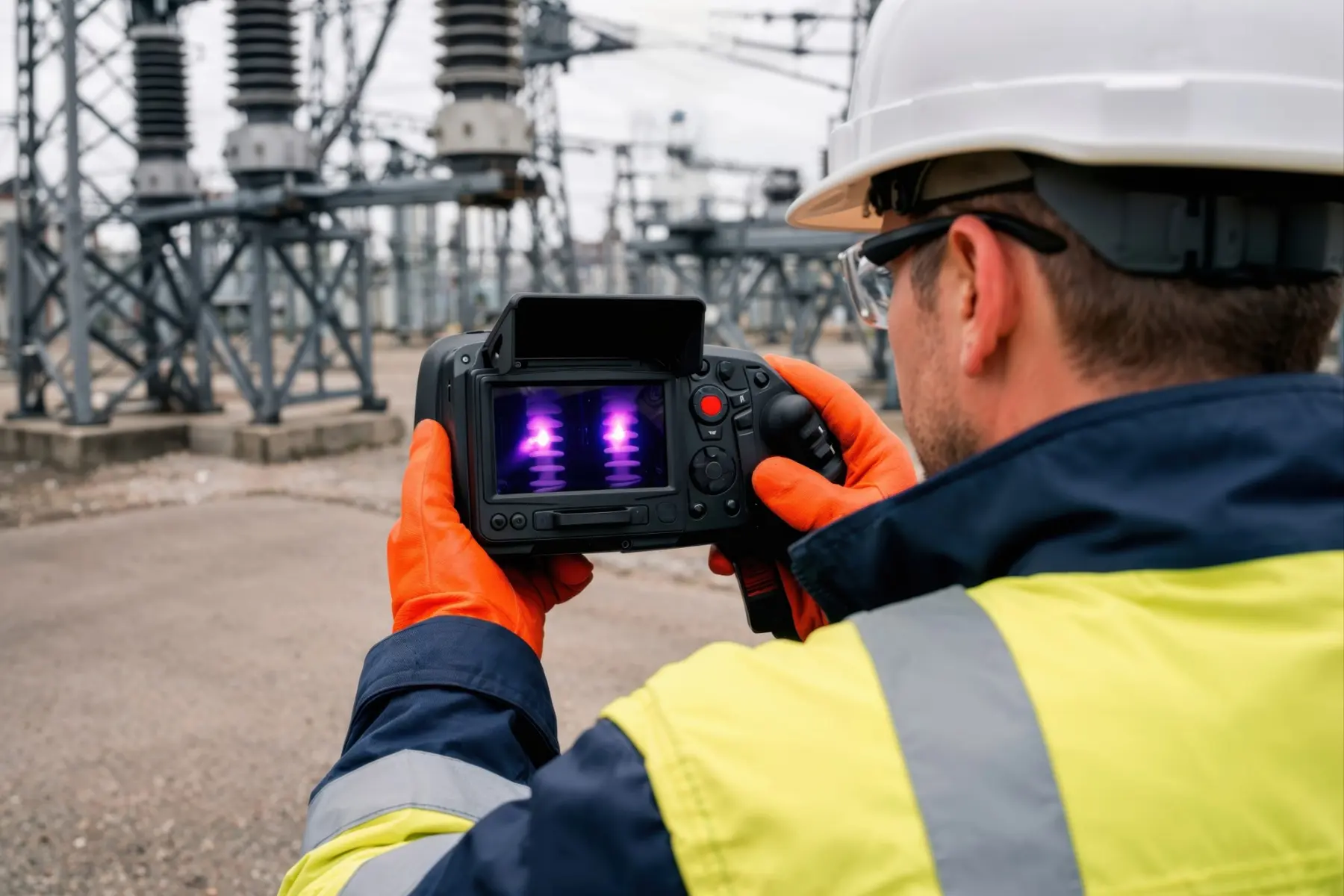
Substations
A full-yard survey under representative load for co-ops, municipal utilities and the engineering firms and prime contractors who serve them. Captured from angles a handheld survey cannot reach, without an outage and without anyone on a ladder, reported as exceptions against the equivalent point on a reference phase.
What it finds
- Connections, jumpers and terminations heating under load
- Disconnect switches and breakers — contact resistance at blades, clamps and bushings
- Transformer cooling: blocked or inactive radiator sections, bushing anomalies
- Capacitor banks and reactors, located to the individual can
- Instrument transformers and surge arresters showing internal degradation
- Bus and conductor sections running hot relative to comparable spans
How the inspection works
The view from the bucket truck is not the view that finds the fault
Ground-level thermography sees what the fence and the equipment in front of it allow. The far side of a bus, the top of a bushing, the upper radiator sections: the points inspected least and failing most. From above, the whole yard is captured under the same load.
Compliance and subcontract capacity
Part 107 certificated, insured, with a certified thermographer performing the analysis. Certificate of Insurance, additional-insured endorsement and W-9 go out with the quote. For prime contractors holding a utility master service agreement, deliverables are prepared for issue under your cover and we do not solicit your client.
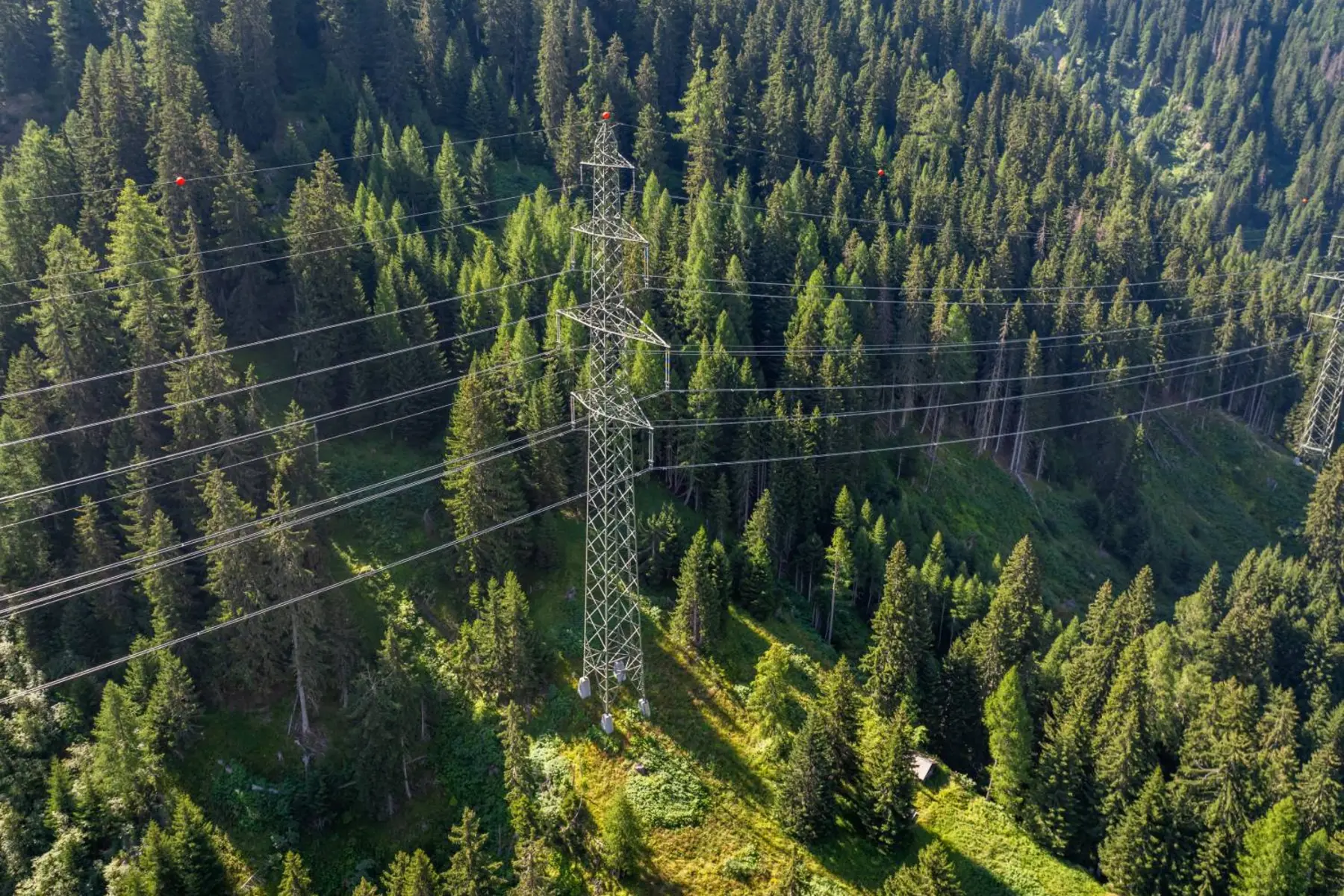
Overhead distribution and transmission lines
Aerial thermal patrol of energised overhead lines, scoped to a feeder, a transmission section or a circuit flagged by outage history rather than an open-ended patrol. Every exception is located to the structure number and compared with the other phases on it.
What it finds
- Compression and automatic splices, hot-line clamps and dead-end hardware
- Fuse cutouts, disconnects and jumper connections
- Pole-mounted transformers, regulators, reclosers and capacitor banks
- Degraded insulators, tracking and failing surge arresters
- Transmission splices, spacer-dampers, jumper loops and insulator strings
- A specific section after a storm or an outage, before or after re-energising
How the inspection works
How line work is scoped
Around airspace, right-of-way access, conductor loading and the operating rules of the utility involved. Patrols are flown under representative load and low-load patrols are flagged as such. Findings are keyed to your structure numbers. Platform, data-handling and security requirements specified by the utility are confirmed in writing before the date.
What you receive
The report is the product. Every inspection is qualitative — exceptions found by comparing like with like under similar load — and every finding is documented so the comparison can be checked.
48 HOURS FOR A SINGLE FRONT RANGE SITE · 5 DAYS MULTI-SITE
- A plan or asset list with every exception located to the component, module, structure or area
- A thermal image and a daylight photograph of each exception, beside what it was compared against
- The load, weather and conditions at the time of capture, so the images can be read in context
- A defect class, a priority ranked by consequence, and a recommended action for every finding
- Findings as structured data for your CMMS or capital plan, so nothing is retyped from a PDF
- Re-inspection of repaired items on request, documented with a new image
Thermal Inspection Program
Put it on a schedule
A single survey tells you what is wrong today. A program is the same inventory, inspected the same way on a fixed cadence, with findings tracked to work orders and each cycle compared with the last. It is also the simplest way to buy this: one agreement, one point of contact, inspections on the calendar before you need them.
For electrical: an annual cycle timed before the planned shutdown so the outage list is written from findings, with solar arrays surveyed in the summer irradiance window and rescanned after hail.
- One or two inspections a year on a fixed inventory, under the same conditions each time
- Every repair re-inspected before it is closed, documented with a new image
- Year-over-year comparison from the second cycle, so trends are visible
- Member rate on anything additional, and priority scheduling after storms and before shutdowns
Electrical questions
Do we have to take an outage?
No. Electrical equipment is inspected energised and under its normal load, because a connection only heats when current is flowing through it. If your loads vary by shift or season, we schedule for the period that represents normal operation and record the load at capture in the report. Solar arrays, substations and lines are the same: energised, loaded, and never touched.
Scope an electrical inspection
Send the asset type, the approximate size and what prompted the request. We will return a scoped quote, with the access plan and any paperwork your vendor file needs, within one business day.
Front Range daily. Statewide for the right project.
Quote scoped and returned within one business day.